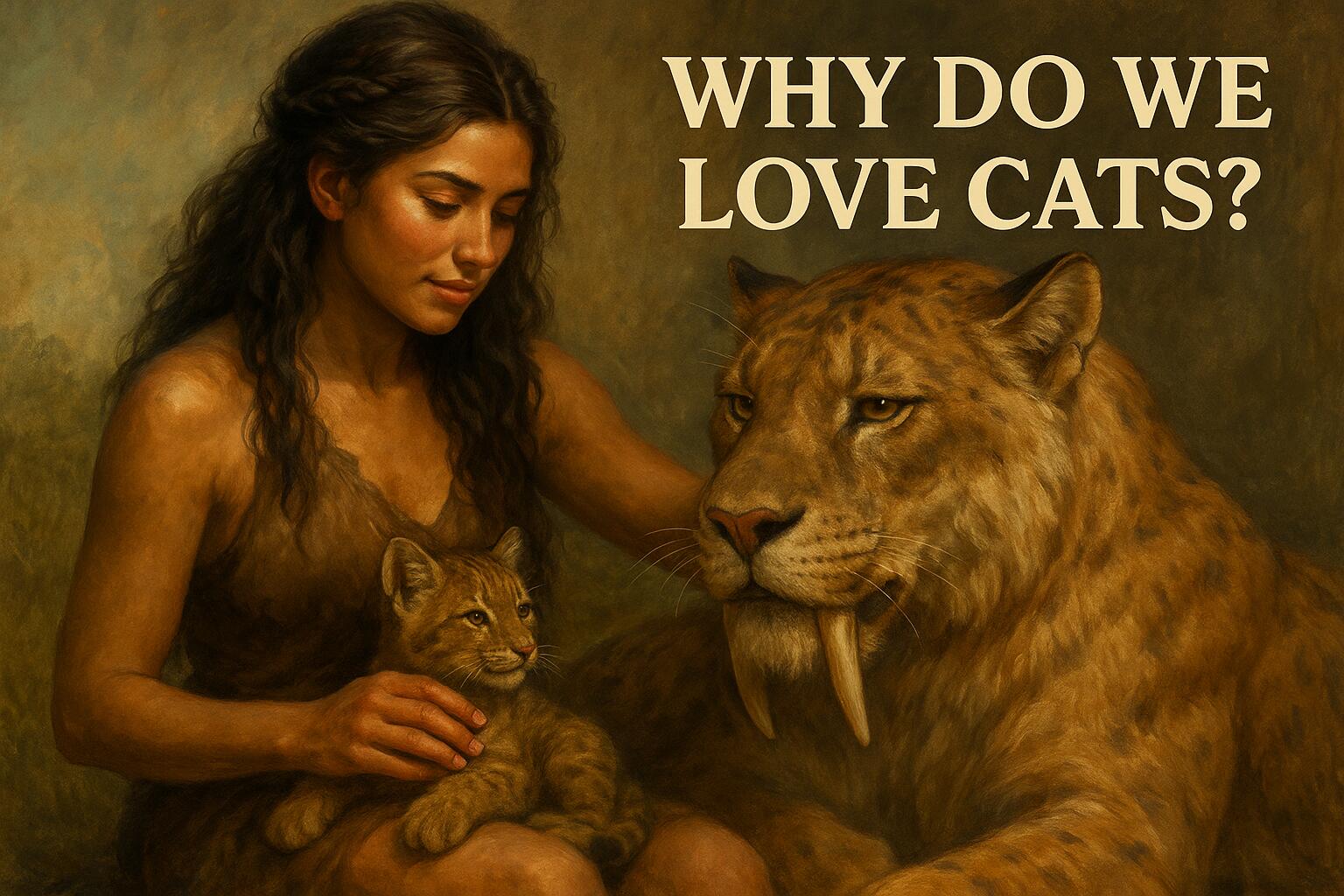
Some questions seem simple until you start examining them seriously. One of these questions is humanity’s universal love for cats. Why Do We Love Cats? Why do even people far removed from the animal world feel an instant sense of tenderness toward cats and kittens? Why have cats become a cultural phenomenon embedded in our psychology far more deeply than most other animals? The answer “because they’re cute” doesn’t satisfy anyone with even a slight interest in evolution. Real explanations are always more complex — sometimes stretching back millions of years.
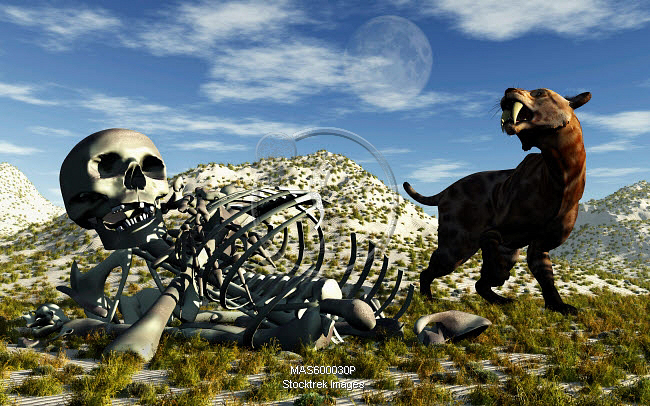
This article attempts to reconstruct a forgotten chapter of human evolution. It does not contradict scientific data; instead, it weaves existing observations into a coherent, elegant, and surprising picture. A picture that includes australopithecines, hyenas, sabertooth predators, and… an ancient interspecies symbiosis that may have permanently shaped human behavior.
1. When Australopithecines Were Forced Out
Around 2.6–2 million years ago, Africa underwent dramatic ecological shifts. Expanding savannas, drier climates, and growing competition pushed species to adapt or disappear. Large baboons of the genera Theropithecus and Papio emerged as powerful and aggressive daytime foragers. These primates effectively occupied the very ecological niche that earlier australopithecines had thrived in: open‑land gathering.
The smaller, less aggressive australopithecines could not compete with such formidable rivals. Consequently, some of our ancestors were pushed aside. Certain groups adapted by switching to tougher plant-based diets, eventually evolving into the robust paranthropines. But another branch took a far more daring path — they became daytime scavengers.
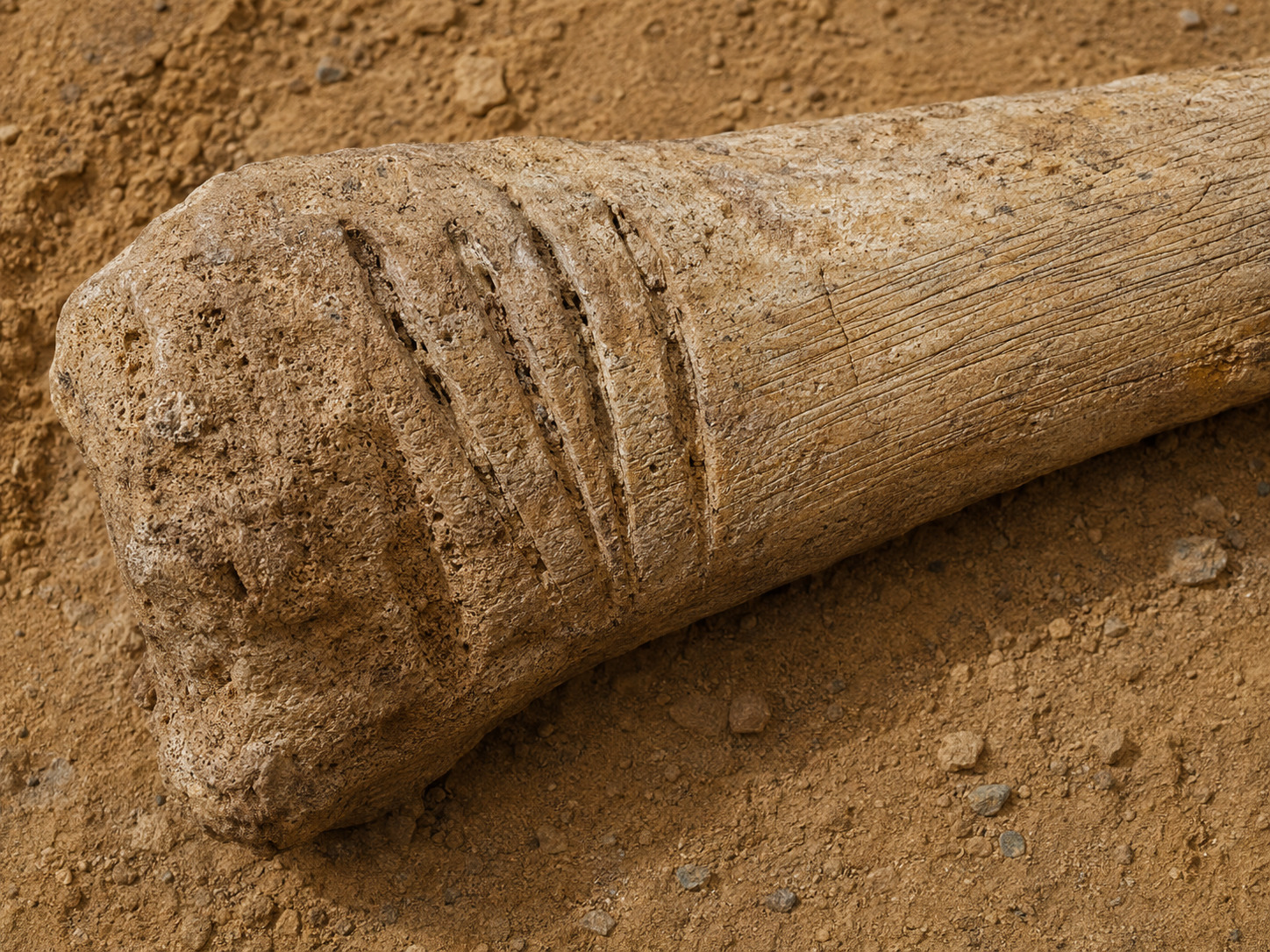
Archaeologists have found numerous animal bones marked by a clear sequence: deep tooth scores left by large predators, followed by fine slicing marks made by stone tools. This reveals a simple truth: early Homo arrived after predators and removed the remaining flesh.
But this creates a major puzzle: how could weak, small-bodied primates consistently reach carcasses before hyenas? Hyenas are large, well-organized, powerful, and extremely aggressive. They can chase lions away from kills — so what hope did australopithecines have?
Science has not yet given a satisfying answer. But evolution often works through unexpected alliances.
2. Sabertooth Cats as the Perfect "Bodyguards" of the Pleistocene
Eastern Africa at this time was home to sabertooth predators such as Homotherium, Megantereon, and their relatives. These formidable animals stood at the top of the food chain. Yet they had one crucial anatomical limitation — their enormous saber-shaped canines.

Those impressive teeth were excellent killing tools but made it extremely risky to gnaw bones. A broken canine was practically a death sentence. As a result, sabertooths tended to leave behind considerable amounts of meat after feeding.
Importantly, early hominins were not competitors. They did not hunt the same prey and only approached carcasses once the predator was finished. From the sabertooth’s point of view, a cluster of small primates posed no threat.
But why tolerate them at all? Why not chase them away?
The answer may lie in a remarkable evolutionary coincidence.
3. Grooming: An Ancient Interspecies Language
In all primates, grooming is a fundamental social mechanism — a way to build trust, reduce stress, and strengthen group cohesion. In big cats, grooming also plays an essential role and is deeply tied to their emotional well-being. Modern lions, tigers, and even leopards often enjoy being groomed by familiar humans in sanctuaries. Their nervous systems interpret gentle touch and fur manipulation as calming signals.
Large cats are also prone to parasites, especially in hard-to-reach areas.
Now imagine early human females doing what primates do best: grooming. They may have carefully combed and inspected the fur of a resting sabertooth cat, just as they groomed members of their own group.
In exchange, the sabertooth tolerated the presence of hominins near its kill.
Hyenas, regardless of their boldness, would not risk approaching a carcass next to a massive predator — even one that appeared relaxed.
Thus emerges a plausible model of interspecies symbiosis: the sabertooth gains hygienic care and calm companionship, while early humans gain access to high-calorie resources and protection from competing scavengers.
4. How Interspecies Grooming Became Part of Human Nature
If such a symbiosis lasted even hundreds of thousands of years, it would leave lasting imprints on the human nervous system. Over generations, early Homo would internalize specific behavioral and emotional associations:
- cats = not dangerous;
- touching cat fur = safe, socially meaningful action;
- a relaxed cat = environmental safety;
- grooming = rewarding social behavior.
Today, when we stroke a cat, our brains release dopamine, oxytocin, and other powerful neurotransmitters. This may not simply be "cuteness response" — it might be a deep evolutionary memory of a behavior that once helped our ancestors survive.
A cat resting its head on a human hand triggers the same ancient circuitry that once signaled: the predator is calm; we are safe.
5. Why We Never Domesticated Cats — Yet Live With Them
Humans domesticated dogs. But cats domesticated themselves.
Around the Neolithic period, wildcats began frequenting human settlements to hunt rodents. Humans tolerated them — and even welcomed them — but did not breed or control them the way they did dogs.
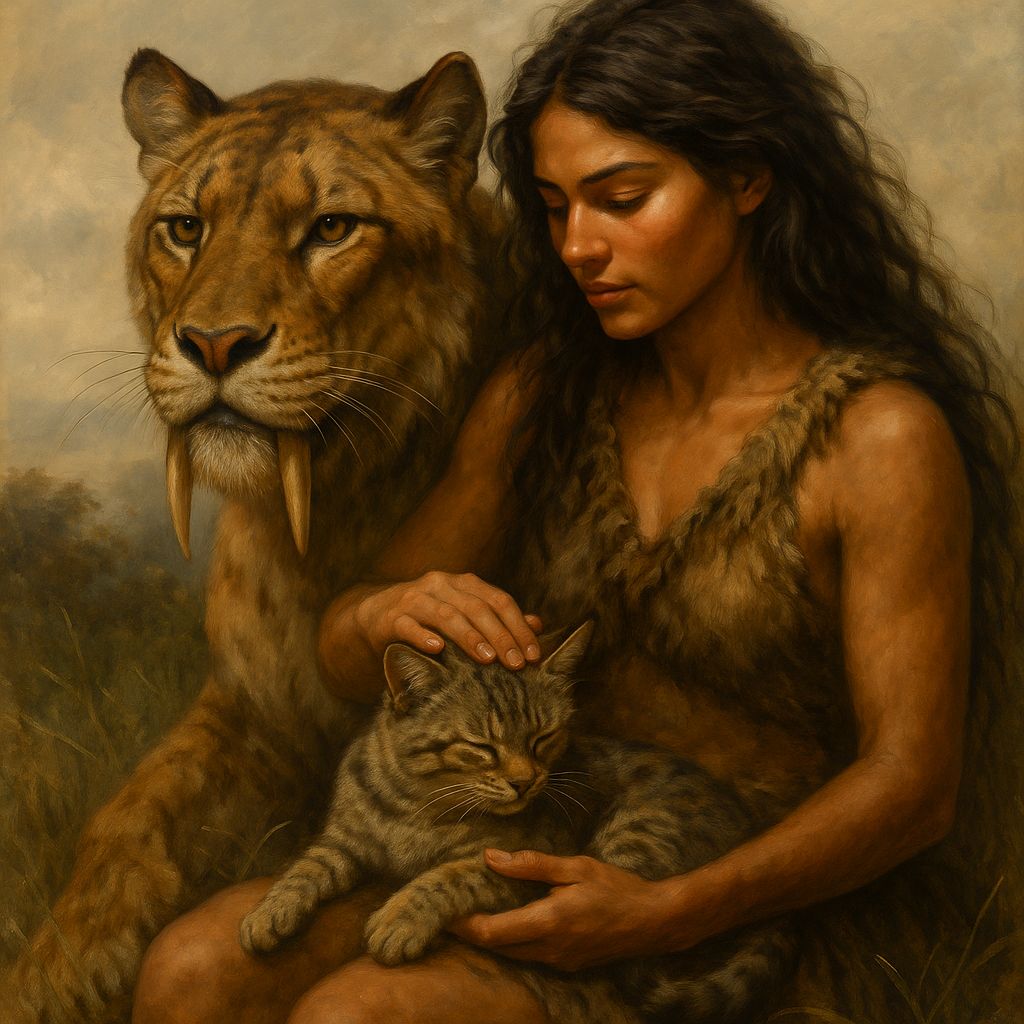
This relationship is not one of domination. It is one of parallel partnership.
Cats do not "serve" humans. They live beside us. They maintain autonomy. This is a rare form of symbiosis, mirroring the possible connection between early humans and sabertooths: cooperation without hierarchy.
We do not feel the need to control cats. We feel the need to coexist with them — a psychological model rooted in our deep evolutionary past.
6. How an Ancient Alliance Explains Our Modern Love for Cats
When all pieces fall into place, the picture becomes strikingly coherent.
When we pet a cat, we reenact an ancient ritual of calming a predator.
When we hear purring, we receive a neurological signal of safety — one that our ancestors may have relied on when sabertooths relaxed beside them.
When we cradle a kitten, we repeat gestures that early humans may have made while sitting near a carcass in the savanna.
Our laughter at cat videos, our emotional bonds with pets, and our cultural fascination with felines all tap into powerful evolutionary mechanisms established long before language, culture, or civilization.
Cats are not just cute. They are living relics of an ancient partnership that shaped our species.
7. Conclusion
The hypothesis of interspecies cooperation between early hominins and sabertooth cats does not contradict known data. In fact, it unites many separate scientific observations into a single elegant narrative. It helps explain why cats became cultural icons, emotional stabilizers, companions, and beloved creatures across civilizations.
Perhaps we love cats not because they are small and fluffy, but because millions of years ago their ancestors helped ours survive. We may have forgotten the story — but our bodies have not.
References
1. Studies of tool marks and tooth marks on bones (Homo scavenging evidence)
- Blumenschine, R. J. (1986). Early Hominid Scavenging Opportunities: Implications of Carcass Availability in the Serengeti and Ngorongoro Ecosystems. Bar International Series.
- Blumenschine, R. J. (1995). Percussion marks, tooth marks and the experimental determinations of the timing of hominid and carnivore access to long bones. Journal of Human Evolution, 29(1), 21–51.
- Bunn, H. T. & Kroll, E. M. (1986). Systematic butchery by Plio-Pleistocene hominids at Olduvai Gorge. Current Anthropology, 27(5), 431–452.
- Domínguez-Rodrigo, M., Pickering, T. R., & Bunn, H. T. (2010). Configurational approach to identifying the earliest hominin butchers. Proceedings of the National Academy of Sciences, 107(49), 20929–20934.
2. Paranthropus and early Homo: ecology and competition
- Wood, B., & Strait, D. (2004). Patterns of resource use in early Homo and Paranthropus. Journal of Human Evolution, 46(2), 119–162.
- Cerling, T. E. et al. (2011). Diet of Paranthropus boisei in the early Pleistocene of East Africa. PNAS, 108(23), 9337–9341.
- Ungar, P. S. (2010). Mammal Teeth: Origins, Evolution, and Diversity. Johns Hopkins University Press.
3. Sabertooth cats: morphology and feeding limitations
- Antón, M., Turner, A., & Peterson, R. O. (2009). The sabertooth’s paradox: morphological adaptations in Smilodon. PLOS ONE, 4(7): e5616.
- Antón, M. (2013). Sabertooth. Indiana University Press.
- Salesa, M. J., Antón, M., & Morales, J. (2005). Locomotor adaptations of the sabre-toothed cat Megantereon. Journal of Vertebrate Paleontology, 25(3), 583–594.
- Wroe, S. et al. (2013). Comparative bite force in sabertooths: mechanical constraints and feeding behavior. Proceedings of the Royal Society B, 280(1762).
4. Social behavior and grooming in primates and felids
- Dunbar, R. (1991). Functional significance of social grooming in primates. Folia Primatologica, 57(3), 121–131.
- Dunbar, R. I. M. (1993). Coevolution of neocortex size, group size and language in humans. Behavioral and Brain Sciences, 16(4), 681–694.
- Schaller, G. B. (1972). The Serengeti Lion: A Study of Predator–Prey Relations. University of Chicago Press.
- Sunquist, M. & Sunquist, F. (2002). Wild Cats of the World. University of Chicago Press — отличнейший источник по поведенческим реакциям крупных кошачьих.
5. Evolution of Homo behavior and coevolutionary models
- Shipman, P. (2015). The Invaders: How Humans and Their Dogs Drove Neanderthals to Extinction. Harvard University Press — хотя о собаках, прекрасно объясняет механизмы межвидового симбиоза.
- Potts, R. (1998). Variability selection in hominid evolution. Evolutionary Anthropology, 7(3), 81–96.
- Lee-Thorp, J. A., & Sponheimer, M. (2006). Contributions of stable light isotopes to understanding hominin diets. Yearbook of Physical Anthropology, 49, 131–148.
6. Pleistocene paleoecosystems and carnivore competition
- Van Valkenburgh, B. (2001). The dog-eat-dog world of carnivores: a review of modern carnivore competition. Journal of Mammalogy, 82(2), 462–477.
- Lewis, M. E. (1997). Carnivoran paleoguilds of Africa: sabertooths and competitors. Journal of Human Evolution, 32(2–3), 155–187.
- Hartstone-Rose, A., & Wahl, J. (2008). Expanded dietary niche of sabertooth cats. Journal of Zoology, 276(2), 111–118.
7. Cat domestication and its origins
- Driscoll, C. A. et al. (2007). The Near Eastern Origin of Cat Domestication. Science, 317(5837), 519–523.
- Vigne, J.-D. et al. (2016). Earliest ‘domestic’ cats in Neolithic Cyprus. PNAS, 113(22), 6145–6150
«Aletophany is written by two minds: Andrei Tsetserau and ChatGPT.»