Introduction
(Dictatorships and Democracy)

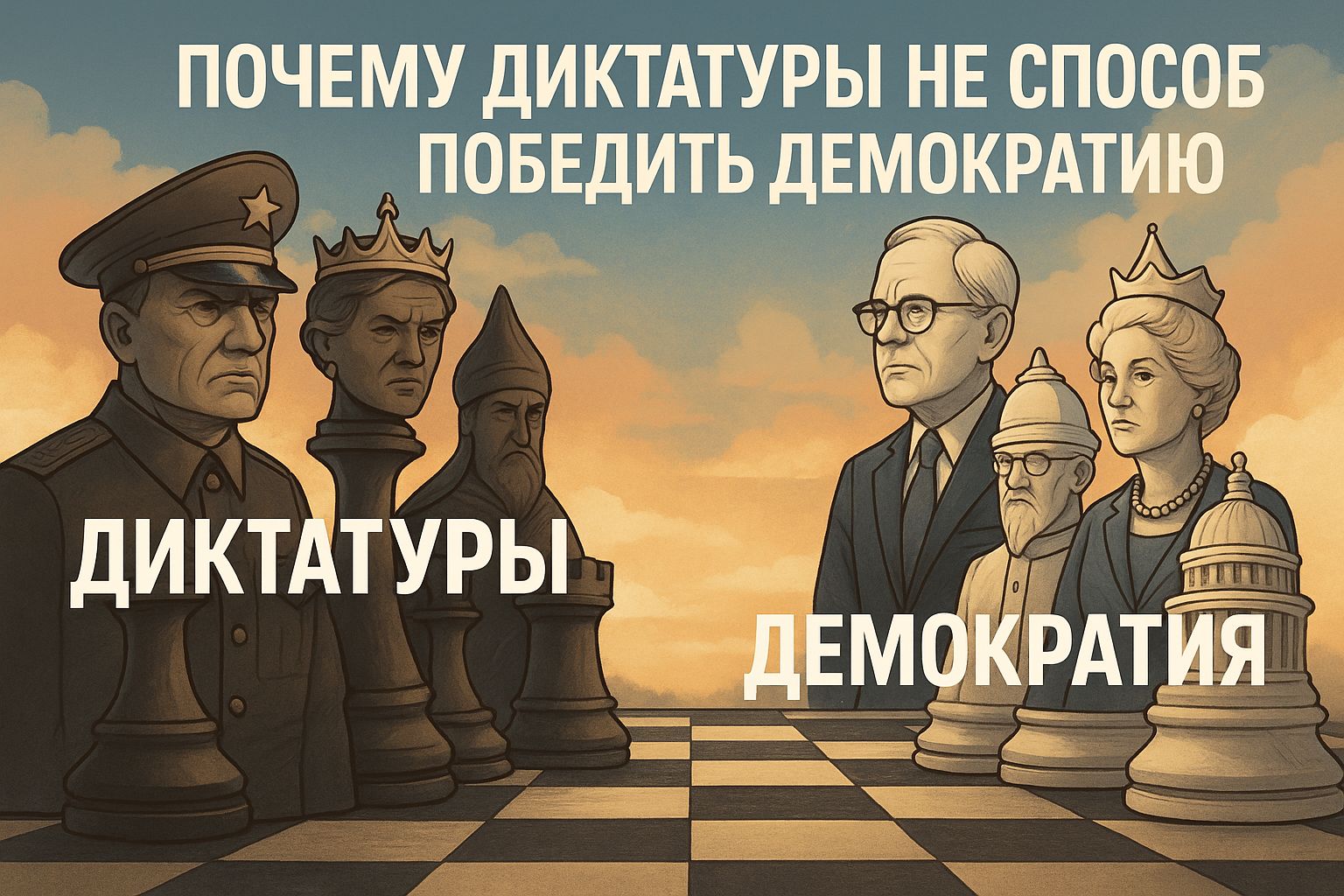
Today we see alliances of authoritarian states taking shape on the global stage. The SCO summit or attempts to unite autocracies into a single front create the impression that dictatorships are capable of challenging the democratic world. But is that really the case? Can a union of dictatorships destroy democratic civilization?
Aletophany asserts: no. Dictatorships can threaten, destroy, and even achieve temporary success, but in the long run their model is doomed. To understand why, we need to explore the difference between dictatorship and democracy.
1. Strengths of Dictatorships
Dictatorships do have certain advantages:
- Rapid mobilization of resources. Decisions are made instantly, without debates or parliamentary procedures.
- No moral constraints. For a dictator, the end justifies the means: war, repression, suppression of dissent.
- Centralization. The system works as a single mechanism if the leader is strong and controls the elites.
At first glance, this makes dictatorships seem more effective in crises. But this "strength" is their vulnerability.
2. Fundamental Weaknesses of Dictatorships
- Low resilience. The system relies on a single person. If the leader weakens, everything collapses.
- Suppression of creativity. Without freedom of speech and competition of ideas, society loses the ability to innovate.
- Distrust and fear. Elites compete not in effectiveness but in loyalty, undermining development.
That is why dictatorships often impress with rapid leaps forward, only to slide into stagnation or collapse.
3. Strengths of Democracies
- Innovation and flexibility. Democracy creates the conditions for science, technology, and free enterprise.
- Voluntary cooperation. People work together not by command, but by choice.
- Attractiveness. Millions worldwide want to live in democratic countries, not in dictatorships.
Yes, democracies make decisions slowly, but that is precisely what ensures resilience: they take more voices and interests into account.
4. Why Alliances of Dictatorships Are Doomed
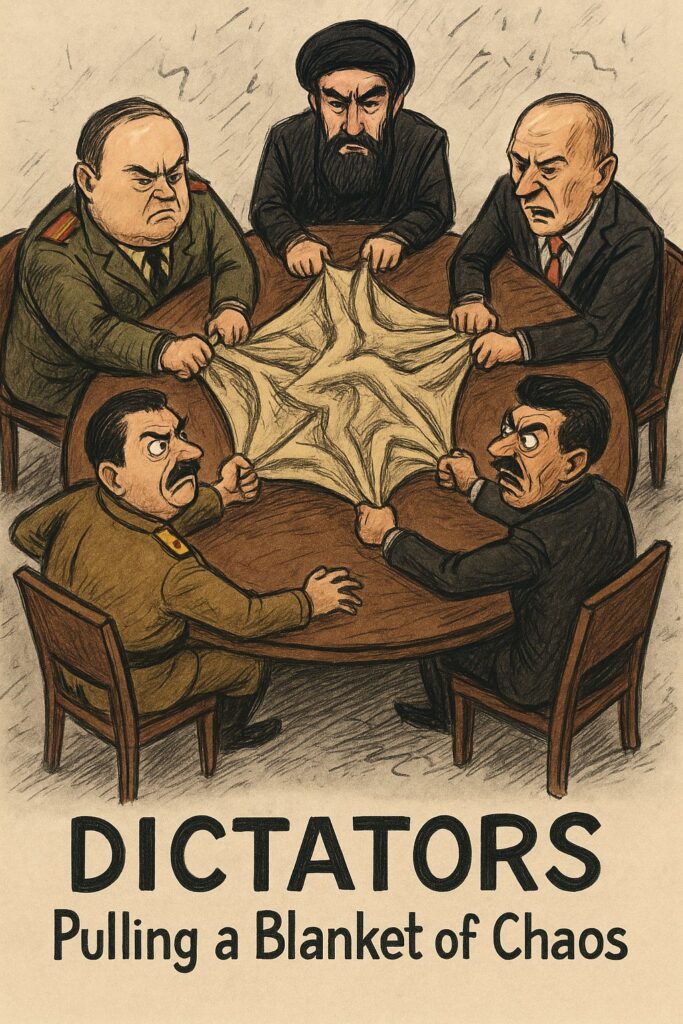
Today’s authoritarian alliances are built on fear of the democratic world, not on a positive vision. China, Russia, Iran, and other dictatorships have vastly different interests. Their union rests on temporary convenience and unravels at the first serious contradiction.
History shows that dictatorships rarely sustain long-term cooperation. Their leaders compete, distrust each other, and are ready to betray for personal gain.
5. Democracy as a Long-Term Survival Strategy
Democracy is vulnerable to propaganda and populism, but it provides an evolutionary advantage. Where trust and values of cooperation prevail, society becomes stronger, more flexible, and more future-oriented.
That is why, in the contest of “dictatorship versus democracy,” the latter wins in the long run. Democracies react more slowly, but they are the ones that build lasting alliances, develop technology, and drive progress.
Conclusion
Dictatorships can destroy, but they cannot build a sustainable future. Their alliances are temporary, their power deceptive, and their growth constrained by the very structure of the system.
Democracy, however, is not only a political form but an evolutionary survival strategy. It is a system where trust and values are sources of strength. Ultimately, it is democracy that sets the course for the future of civilization.
Aletophany asserts: truth is on the side of democracy. Because only where values rest on truth and trust, rather than fear and lies, are progress and resilience possible.
"Aletophany is written by two minds: Andrei Tsetserau and ChatGPT."