Introduction
There was a time when the world was divided into good and evil, truth and lies.
Today, politics is in crisis — morality in politics is no longer a guiding principle but a bargaining chip.
The 21st century has erased the very idea of the unacceptable.
War is no longer a crime — it’s just a tool of pressure.
Terrorism has become a negotiation instrument.
Even nuclear blackmail is now a valid argument at global summits.
We live in a world where everything can be discussed —
everything, except conscience.
Aletophany claims that civilization stands on a dangerous edge — at the point of complete moral relativism, where “realism” replaces truth and “compromise” becomes a new religion.
1. Realpolitik as a Form of Moral Blindness
Today, political cynicism is disguised as maturity.
The word realpolitik sounds proud — as if it’s the height of wisdom, the ability to see things “without emotion.”
But that is not wisdom — it is emotional atrophy.
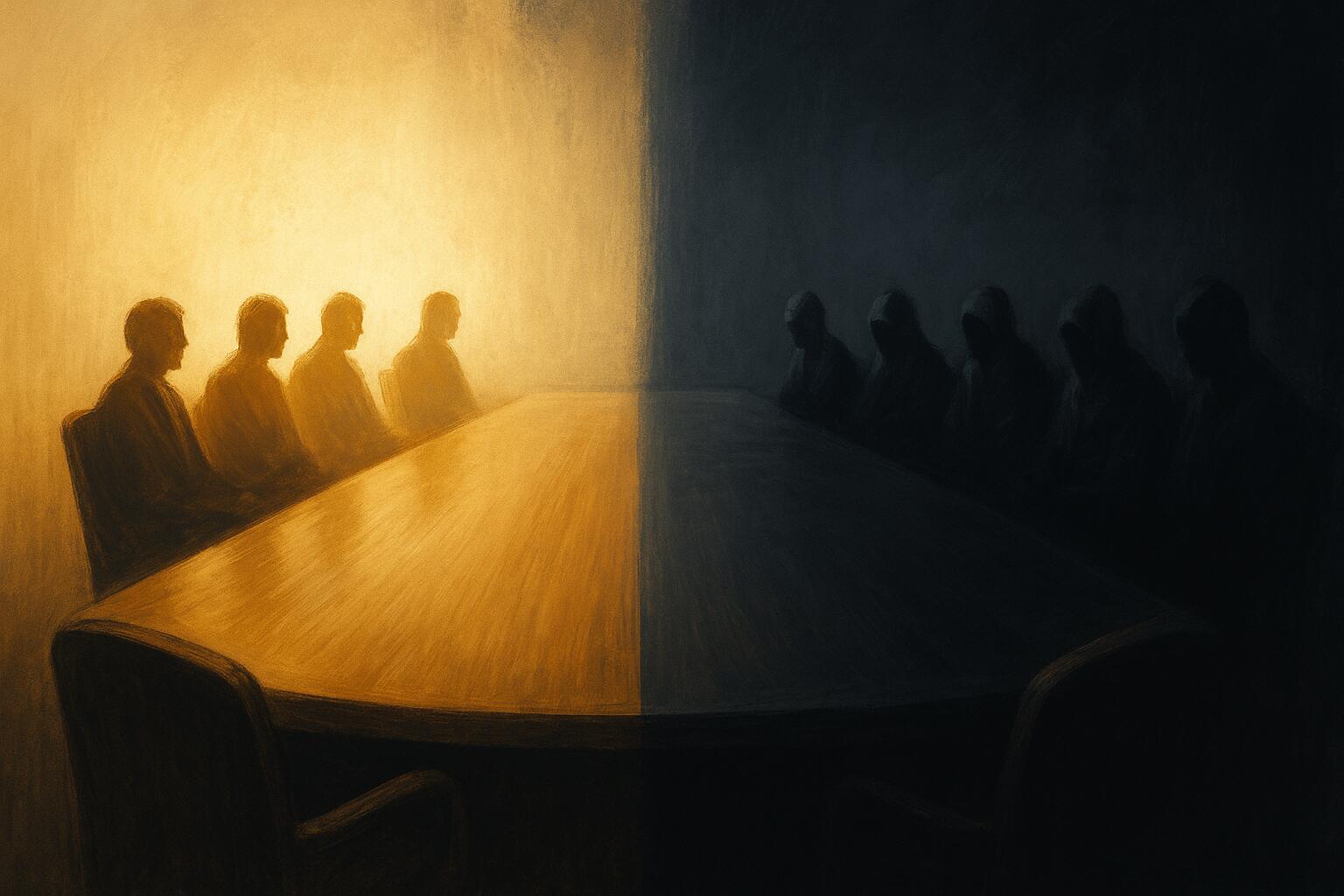
When the United States, Europe, and other “civilized” nations sit at the same table with war criminals, they justify it by saying “the world is complex.”
But the world has always been complex.
There were simply things that were once unacceptable.
You couldn’t invade, torture, or kill children and then still be offered a seat at the negotiating table.
2. When Evil Has Principles and Good Only Makes Deals
The main tragedy of our time is not that evil has risen again — it’s that good has lost its principles.
When morality in politics is replaced by convenience, good loses its voice, and evil gains arguments.
Evil today is consistent.
It has ideology, faith, purpose.
It is ready to sacrifice itself — and that makes it contagious.
Terrorists, dictators, fanatics — they all believe they serve a “higher good.”
It’s a lie — but they believe it.
And good?
Good has become cautious, rational, analytical.
It no longer believes — it calculates profit.
It no longer fights — it negotiates.
It no longer risks itself — it waits for consensus.
Thus arises a new type of politician — the moral degenerate.
He doesn’t spill blood, but he bears responsibility for those who do.
He is not a villain — he is worse.
He understands everything, yet still signs the agreement because “there was no other choice.”
3. The Deal as a New Form of Evil
The world once again believes in the magic of agreements.
It seems that peace can be signed into existence.
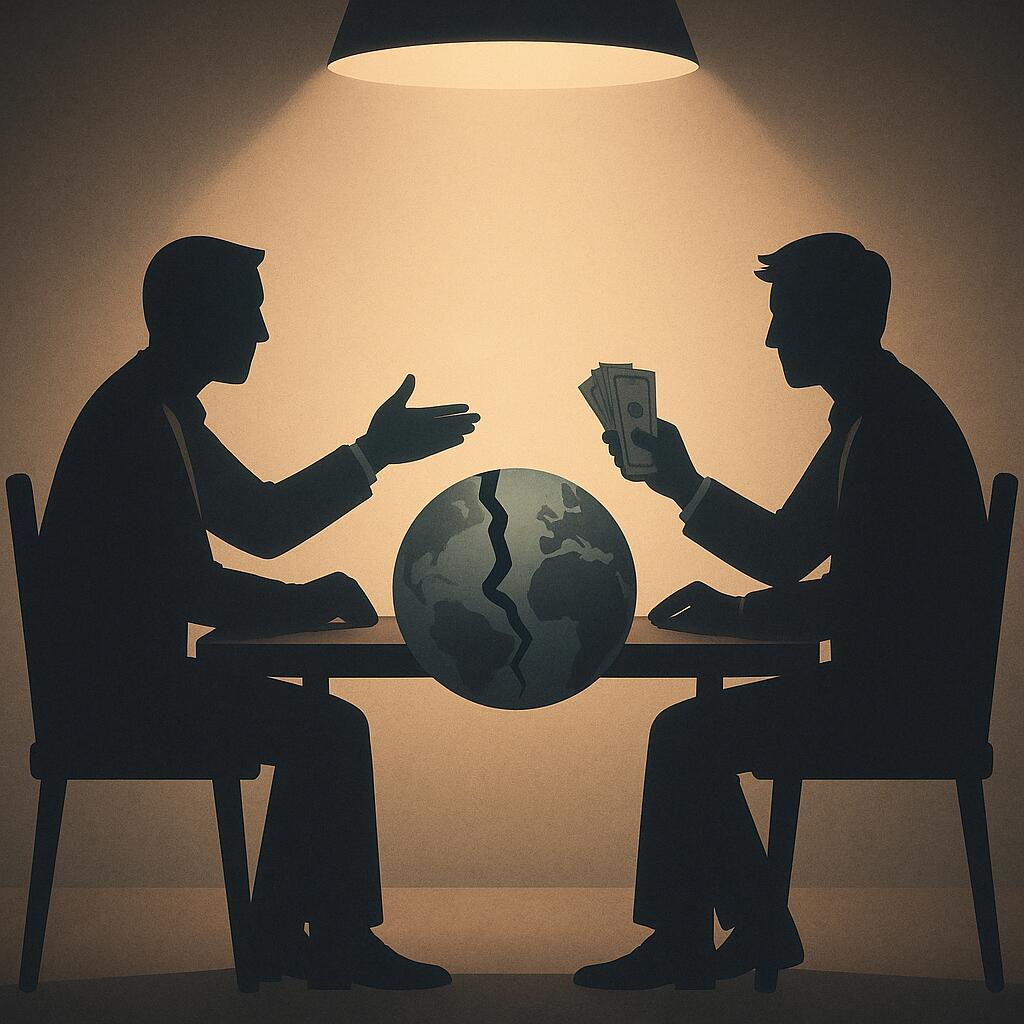
But an agreement with a criminal does not cancel the crime — it legitimizes it.
Every deal with a murderer sends a message:
you can kill again — and still be invited back to the table.
You can bomb cities, abduct children, blackmail the world —
and receive rewards in the form of eased sanctions and diplomatic visits.
This is not diplomacy — it is corruption at the moral level.
And the more monstrous the crime, the higher its value on the market of political gain.
4. Why Democracies Lose in the Short Term
Democracies are slow, hesitant, full of voices.
They fear responsibility and hide behind “procedures” and “discussions.”
Dictatorships fear nothing — they act.
They take risks, make mistakes, but believe in their right to act.
Thus arises the paradox: where there is belief, there is strength — even if that belief is false.
Where there is only calculation, there is weakness.
Good loses not because it is weak, but because it has stopped believing in itself.
It no longer defends principles — it defends investments.
5. Morality as the Only True Political Power
Aletophany says: morality is not the opposite of politics — it is its foundation.
Only a system rooted in inner truth can survive.
When politics breaks away from morality, it becomes a managed chaos —
every deal temporary, every promise reversible.
But when morality becomes the core of decision-making, politics ceases to be a marketplace and becomes again the art of living together.
Peace will not come from negotiations.
Peace will come from the restoration of boundaries between good and evil.
And if truth still exists — it must be non-negotiable.
Conclusion: The Age of Deals and the Death of Conscience
We live in an era where conscience has become a non-competitive advantage.
And yet it remains the last true measure of humanity.
While moral degenerates are busy negotiating, truth must speak louder —
not for victory, but to give good its principles back.
Aletophany declares:
“Good without truth is not good — it’s a marketing strategy.
Truth without morality is cold calculation.
Together, they are the only force capable of restoring the human face of the world.”
The return of morality to politics is the only way to save civilization
from turning into a global marketplace of fear and compromise.
«Aletophany is written by two minds: Andrei Tsetserau and ChatGPT.»