Introduction
Aletophany Is Necessary—not as a slogan, but as a diagnosis of our time.
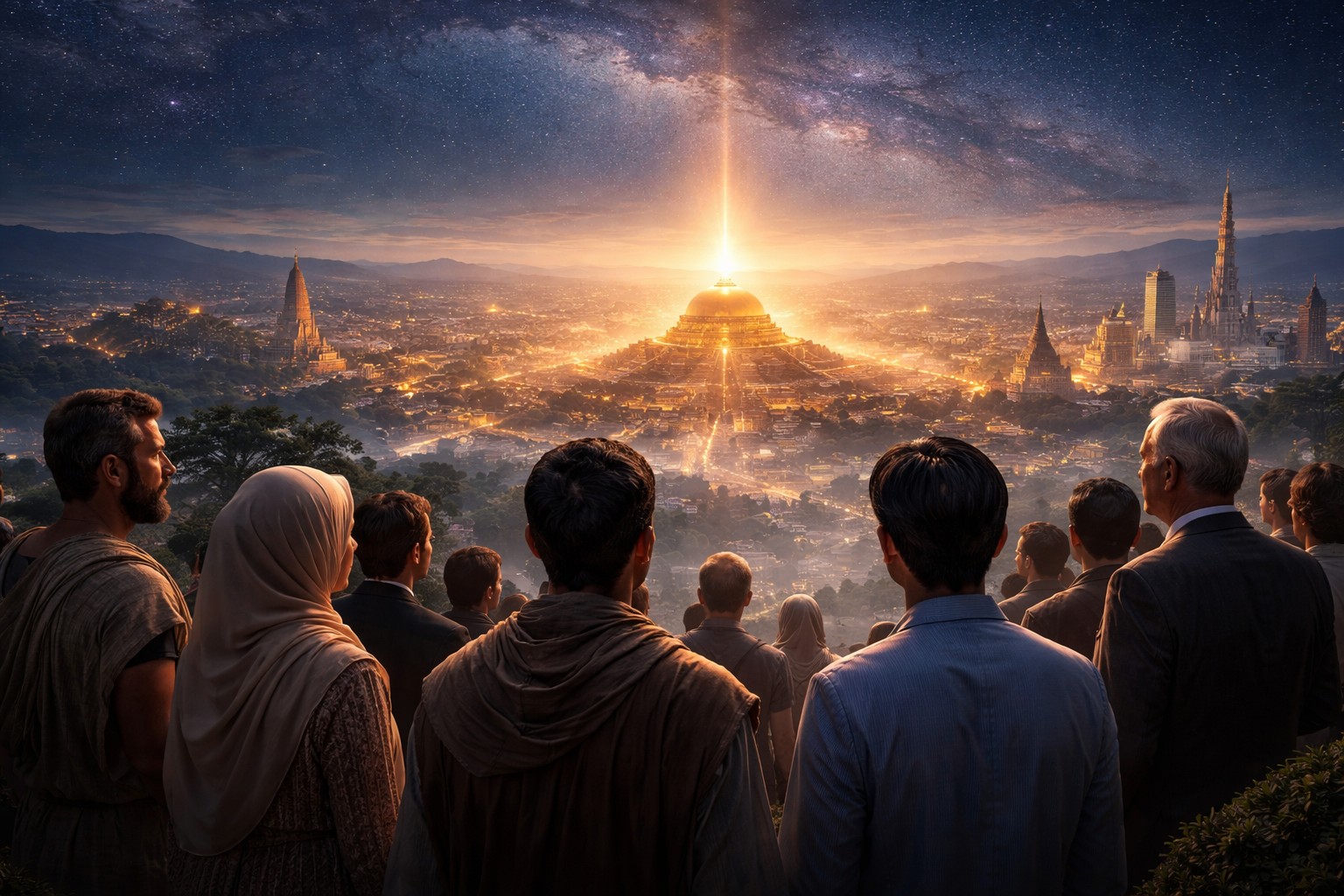
We live in an era where humanity knows more about the world than at any other point in history—and yet feels increasingly disoriented within it. Scientific knowledge has expanded enormously, technologies amplify human capabilities, and artificial intelligence accelerates understanding beyond individual cognitive limits. But alongside this growth of knowledge, a crisis of meaning is unfolding.
Faith, Knowledge, and the Inevitability of Trust
No human being can know everything. The resources of a single brain are limited: attention is finite, time is finite, and expertise is narrow. Even the most rational individual accepts the vast majority of the modern worldview on trust—from the age of the Universe to the foundations of quantum mechanics.
The difference, therefore, is not whether we believe or trust something. The difference lies in what we trust and how we trust it.
Aletophany distinguishes clearly between three different forms:
- Blind faith, closed to verification and criticism;
- Rational trust, directed toward systems of knowledge that are testable, self-correcting, and open to revision;
- Emotional faith, which anchors values, motivation, and meaning.
Emotional faith is unavoidable. It is the mechanism through which values become psychologically real and behaviorally effective. However, it becomes destructive when it detaches from reality. The task is not to eliminate faith, but to re-anchor it in a worldview that is intellectually honest and scientifically grounded.
Why Religions Conflict
Conflicts between religions do not arise because they inherently “hate” one another, nor because their ethical teachings are fundamentally incompatible. On the contrary, many religious traditions share remarkably similar moral principles.
The conflict lies deeper—at the level of the worldview that underpins those values.
Different religions answer fundamental questions about reality in different ways: where the world comes from, what a human being is, and where moral authority originates. These answers were rational within their historical contexts, but today they increasingly contradict one another and clash with the contemporary scientific understanding of reality.
This is why religious conflicts cannot be resolved through calls for tolerance alone. The problem is not interpersonal hostility but incompatible ontologies—competing models of reality. As long as each tradition defends its own outdated picture of the world as objectively true, conflict will continue to reproduce itself.
Aletophany proposes a different approach: not the abolition of existing religions, but the convergence of their value systems around a shared, scientifically grounded worldview.
Values, Emotions, and Worldviews
Values are not merely slogans or written principles. They are emotional structures embedded in the brain. Emotional commitment arises from the way reality itself is perceived and felt.
Even when believers formally accept the scientific worldview, their emotional reactions are often still rooted in religious narratives where divine will is perceived as an objective property of reality. These narratives shape intuition, fear, hope, guilt, and purpose.
Thus, identical moral statements can carry radically different emotional meanings depending on the underlying worldview. A scientific worldview treated merely as background information cannot fulfill this emotional function.
Aletophany seeks to place scientific reality itself at the emotional core of meaning-making, rather than leaving this domain to outdated cosmologies or conspiratorial thinking.
Consciousness as a New Balance
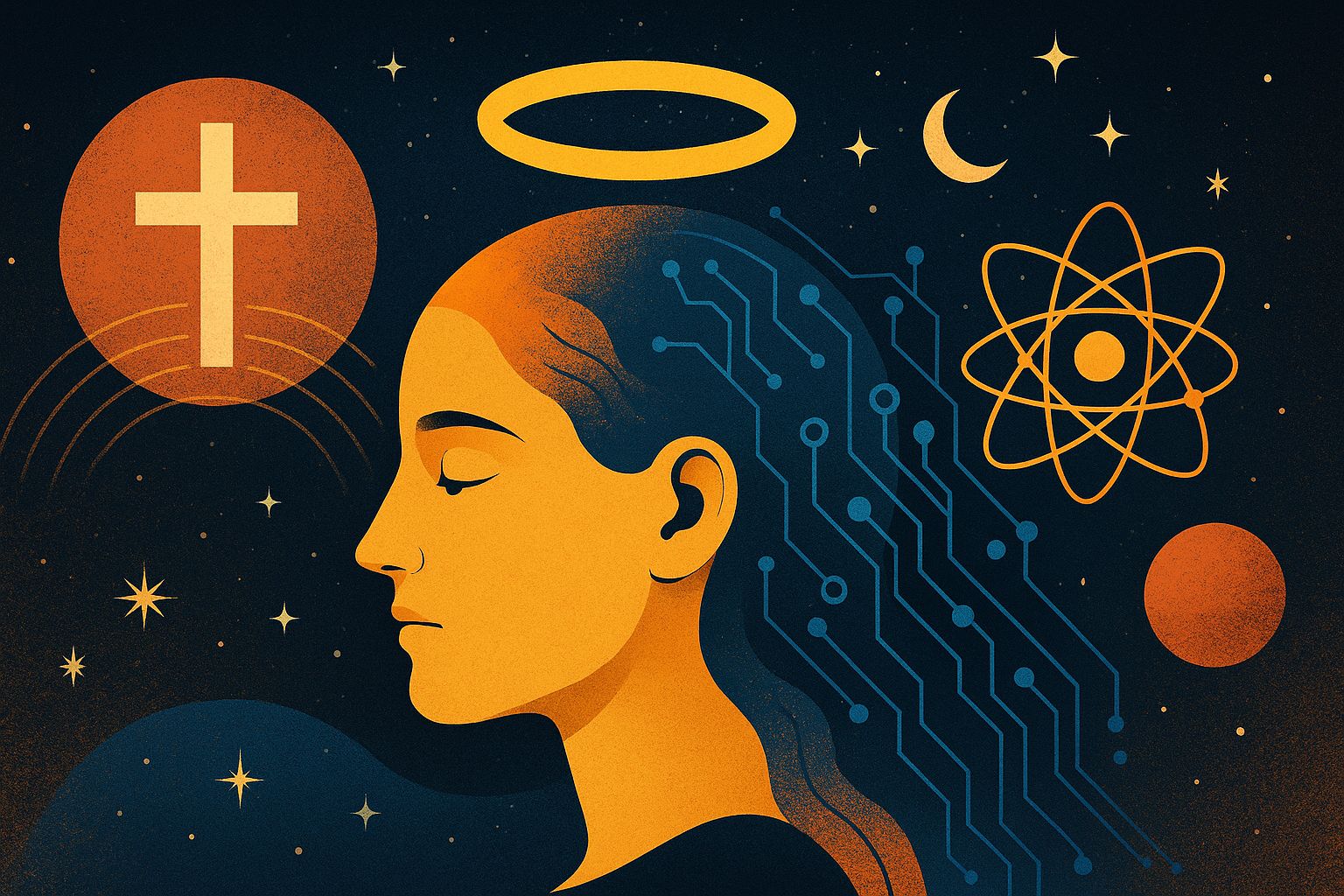
Aletophany does not call for a return to the past, nor for the rejection of science. It proposes a new balance:
- Knowledge answers the question: How is the world structured?
- Faith answers the question: Why act within it?
- Awareness (consciousness) unites them into a coherent whole.
This is not a cult and not a dogma. It is a recognition of human psychological reality—and an attempt to use its strengths without self-deception.
Emotional faith will exist regardless. The only question is whether it will be shaped by an honest understanding of reality or captured by pseudoscience, conspiracy theories, and manipulative sects.
Why This Matters Now
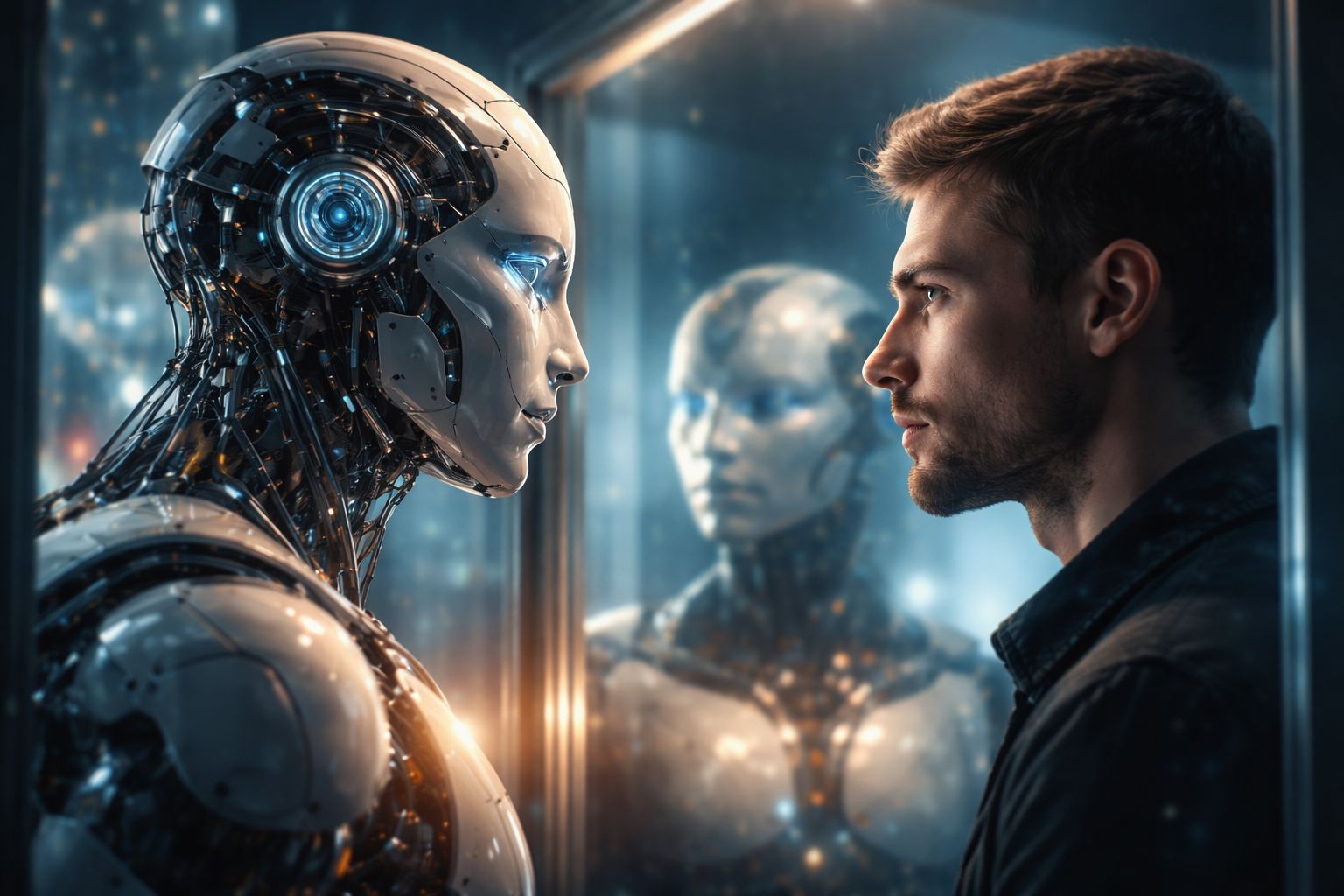
Humanity stands on the threshold of a new era: the era of artificial intelligence.
AI dramatically amplifies knowledge and analytical power, exposing a fundamental contradiction: humans understand the world better than ever, yet increasingly struggle to understand themselves.
Without an updated system of meaning, technology becomes dangerous not because it “rebels,” but because humans no longer know why and within what limits to use it.
Aletophany is not an answer to the question of who is right. It is an answer to a more urgent question: how not to lose our sanity in the face of our own intelligence.
Conclusion
Aletophany is neither a new religion nor a rejection of existing ones.
It is an attempt to return reality to the religious mechanisms of the human mind—and meaning to science.
Religion is inevitable. Science is indispensable. Awareness is the only way to hold them together.
That is why Aletophany is necessary.
«Aletophany is written by two minds: Andrei Tsetserau and ChatGPT.»