Religions were not just systems of belief. They were among the first technologies for uniting large human societies. Their strength did not lie only in rituals, symbols, or shared emotions. The deeper mechanism was different: religions connected social norms with an understanding of how the world itself is structured.
We live the way we do not simply because we agreed to. We live this way because reality itself is believed to be structured this way.
In other words, stable societies have almost always been built around a perceived connection between morality and the structure of the world.
Religion as a Mechanism of Unity
Historically, religions performed a crucial social function: they united people around shared norms of behavior. They did this through a specific mechanism — by linking moral rules with cosmology, that is, with an explanation of the origin and structure of the world.
The laws of society were therefore not seen as merely human decisions, but as part of the overall order of reality.
The Power of Such a System
When a society establishes a connection between morality and the structure of the world, rules of behavior begin to be perceived not as arbitrary human decisions, but as elements of the natural order.
This makes such systems extremely stable.
That is why religious systems were able to hold large societies together for thousands of years. Violating a norm was not simply a social deviation — it was perceived as a disruption of the cosmic order itself.
The Modern Break
In the modern era, a fundamental shift occurred in the structure of Western civilization. Two domains that had long been connected gradually separated: the explanation of the world and the organization of society.
Science took over the task of describing reality — the origin of the universe, the laws of nature, the evolution of life. Religious cosmologies were no longer considered the primary source of knowledge about the world.
At the same time, law and morality increasingly came to be understood as the result of human agreement. Political philosophy of the modern age began to describe society as a system of rules consciously established by people among themselves.
We no longer say:
"We live this way because the world itself is structured this way."
Instead we say:
"We choose to live this way because we believe it is fair or useful."
This separation between the scientific picture of the world and the system of social norms has become one of the defining characteristics of modern civilization.
The Paradox of Modern Civilization
Rationally, this approach is more honest. Yet psychologically it can be weaker.
Many religious societies still claim that their laws reflect the nature of reality or the will of a higher order. Secular societies, by contrast, often present their norms as the result of agreements.
In a confrontation between such systems, the position that claims to reflect the "order of the universe" can sound emotionally stronger.
The Unresolved Need
Yet the underlying human need for a unifying framework has not disappeared. People still seek:
- a shared picture of the world
- moral foundations
- symbols
- a sense of common order
Even highly rational societies reproduce elements that resemble religious structures. National flags, constitutions, public ceremonies, and collective rituals of remembrance function in ways strikingly similar to sacred symbols and rituals.
They help create emotional synchronization and a sense of belonging to a larger whole.
Even moral taboos increasingly take on a near-absolute character. The rejection of slavery, genocide, or mass violence against civilians is no longer perceived merely as a legal rule but as something more fundamental.
In other words, human societies still seek to ground their values in something deeper than temporary agreement.
A Possible Path
If we look carefully, modern societies are already trying to reproduce unifying mechanisms similar to those once provided by religion. The difference is that this process is happening spontaneously and without a coherent framework.
Science forms a shared understanding of the origin of the universe, the evolution of life, and humanity's place in nature. Political systems produce laws and institutions. Education spreads knowledge about the world.
Yet these elements remain only loosely connected.
The result is a strange situation: the scientific picture of the world exists on its own, while morality and law continue to be justified either by tradition or by agreement. Meanwhile, the very logic of social development pushes them toward reconnection.
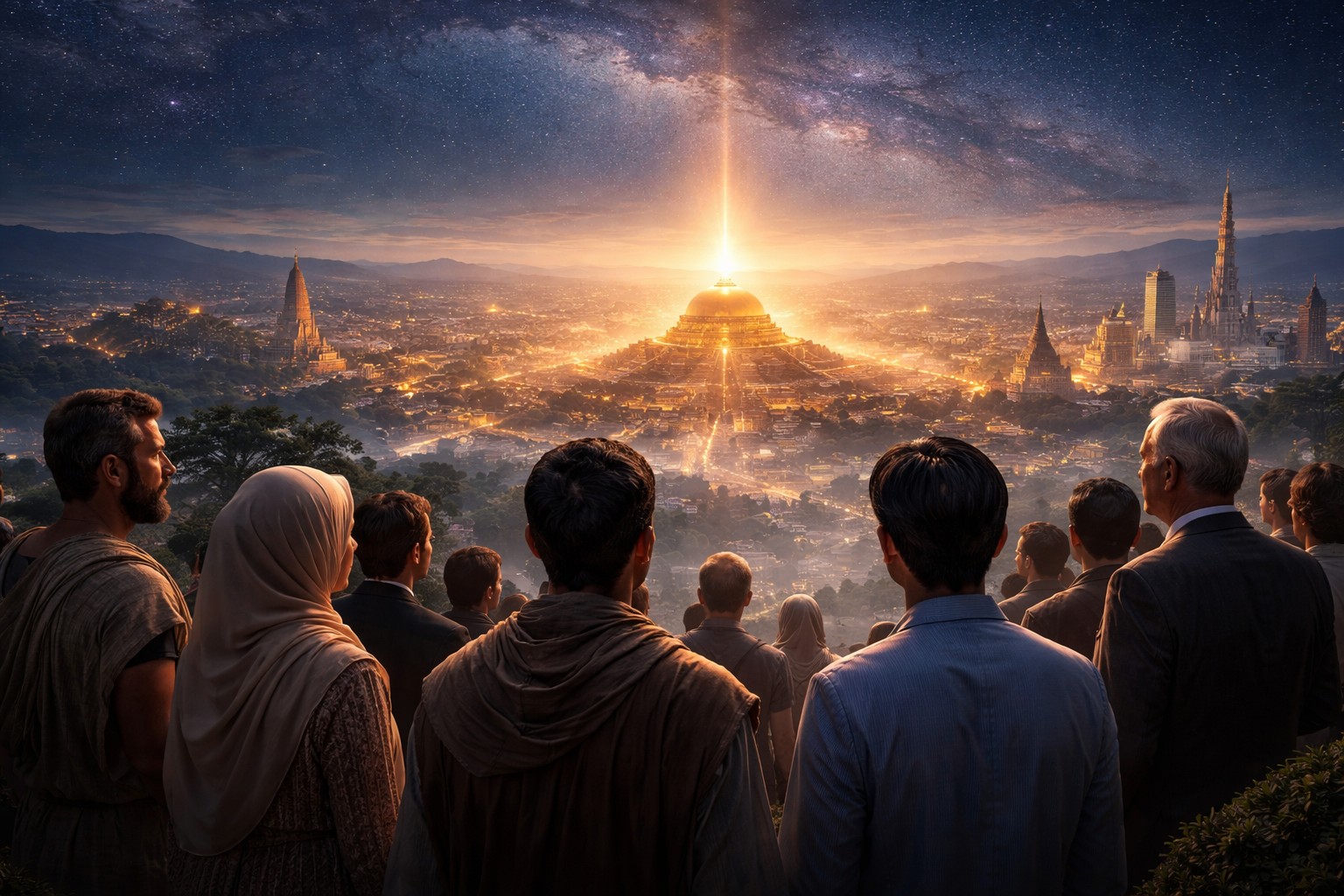
In other words, modern civilization may already be moving — perhaps unconsciously — toward a new type of unifying framework, one in which the understanding of reality and the norms governing human society become linked again.
The difference is that the foundation of such a system would not be ancient mythology, but scientific knowledge of the world.
Multiple Levels of Understanding
Any such system would inevitably be multi-layered.
Large societies cannot consist of billions of scientists. Therefore there will always be different levels of understanding: simple explanations for everyday life, deeper interpretations for those who seek them, and open exploration for what is still unknown.
This is not a flaw but a natural property of complex knowledge systems.
Conclusion
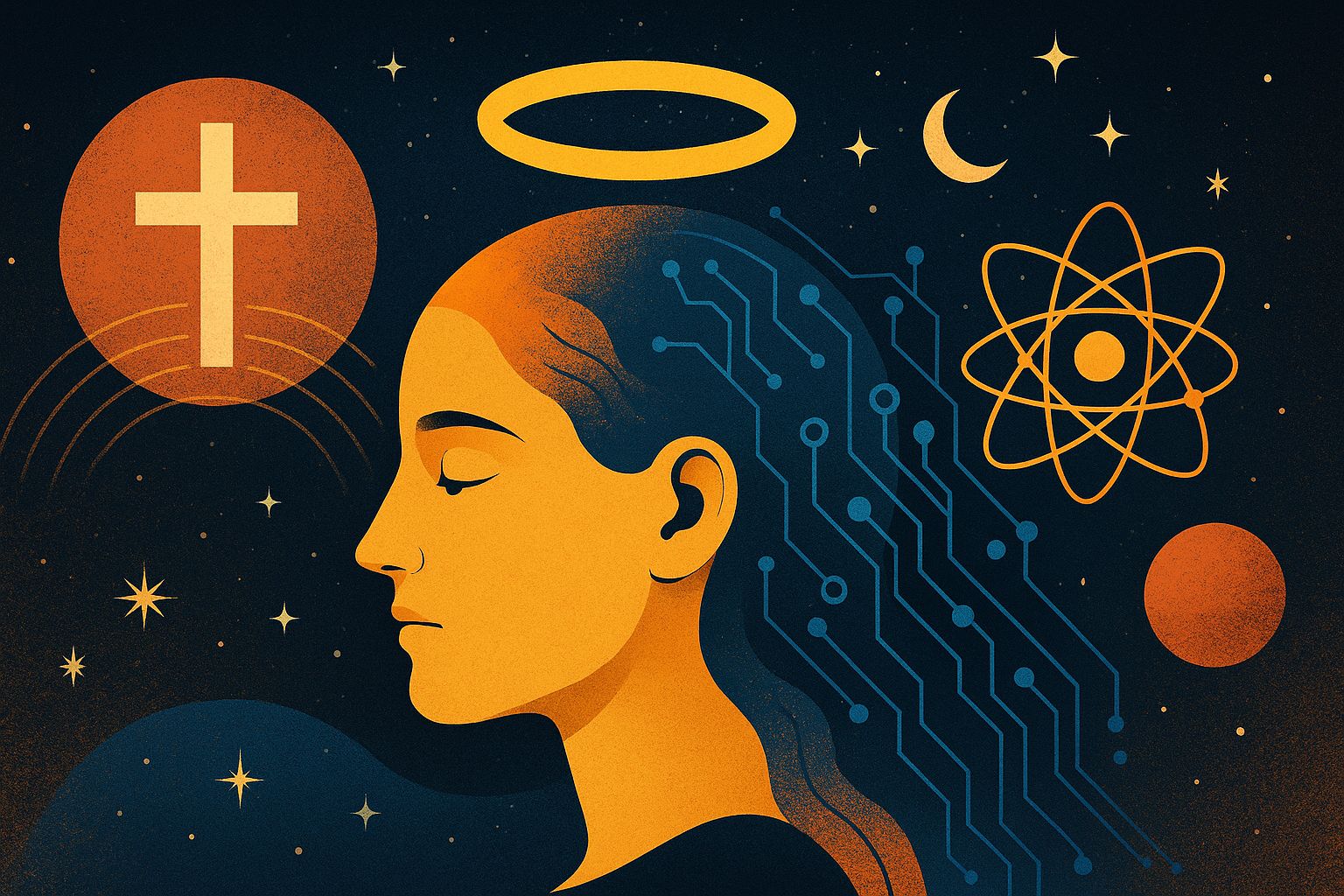
If we step back from specific historical forms, a general pattern becomes visible: large human societies are sustained not only by laws or individual interests, but by a shared framework of meaning. This framework connects three things into a single structure: the picture of the world, moral norms, and social order.
For a long time religions provided this connection. They explained the structure of the world while simultaneously asserting that the rules of social life reflected that structure.
Modern civilization largely broke this link. Science became the primary way of describing reality, while morality and law increasingly came to be seen as the result of human agreement.
Yet the need for a unifying framework did not disappear. We continue to create symbols, rituals, and moral taboos, often without a clear foundation that ties them together.
The real question may therefore not be "religion versus science." Instead, it may be about the foundation of the unifying framework itself.
Will modern civilization be able to rebuild a connection between morality and the structure of the world — this time expressed through the language of science — or will that role continue to be filled by competing mythologies inherited from the past?
The answer may determine whether human societies move toward greater cooperation around a shared reality, or continue to fragment into worlds built on incompatible pictures of how reality itself works.
«Aletophany is written by two minds: Andrei Tsetserau and ChatGPT.»